
Back-to-School Shopping Is Starting Earlier: What E-Commerce Brands Need to Do Now

Back-to-school shopping used to feel like an August event.
Families purchased school supplies, clothing, electronics, and dorm essentials shortly before students returned to class. That familiar timeline is changing.
Today, the back-to-school shopping season begins while many families are still planning summer vacations. For e-commerce brands, waiting until August to prepare inventory and promotions may mean showing up after shoppers have already made their purchasing decisions.
Back-to-School Shopping Now Begins in Early Summer
According to the National Retail Federation (NRF), approximately one-third of back-to-school shoppers had already started browsing or buying by early June. This represents one of the earliest starts to the shopping season since the NRF began tracking the trend.
Several factors are contributing to this shift:
Families want more time to compare prices.
Higher household expenses are making shoppers more budget-conscious.
Major retailers are launching summer sales earlier each year.
Parents are spreading purchases across multiple pay periods.
Social media continues to influence children's product requests.
Electronics and other higher-priced purchases require more research before buying.
Major retailers are responding by extending seasonal promotions across June, July, and August instead of relying on one traditional back-to-school sales window.
For brands, the season is no longer a sprint. It is becoming a much longer race.
Seasonal Inventory Needs to Arrive Earlier

Even the strongest promotion cannot succeed if inventory is still at the manufacturer, waiting at a port, or being checked into a fulfillment center.
Back-to-school inventory planning should account for:
Manufacturing lead times
International shipping and transit
Customs clearance
Warehouse receiving
Product preparation and labeling
Amazon FBA appointment scheduling and check-in delays
Replenishment timing
Increased promotional demand
Inventory that arrives just before peak demand leaves very little room for error.
Brands selling backpacks, apparel, office supplies, electronics, food storage products, personal care items, dorm accessories, organizational products, and household essentials should begin reviewing demand earlier than they have in previous years.
The old calendar may still be hanging on the wall, but shoppers have already moved on.
Product Listings Need to Match Seasonal Intent
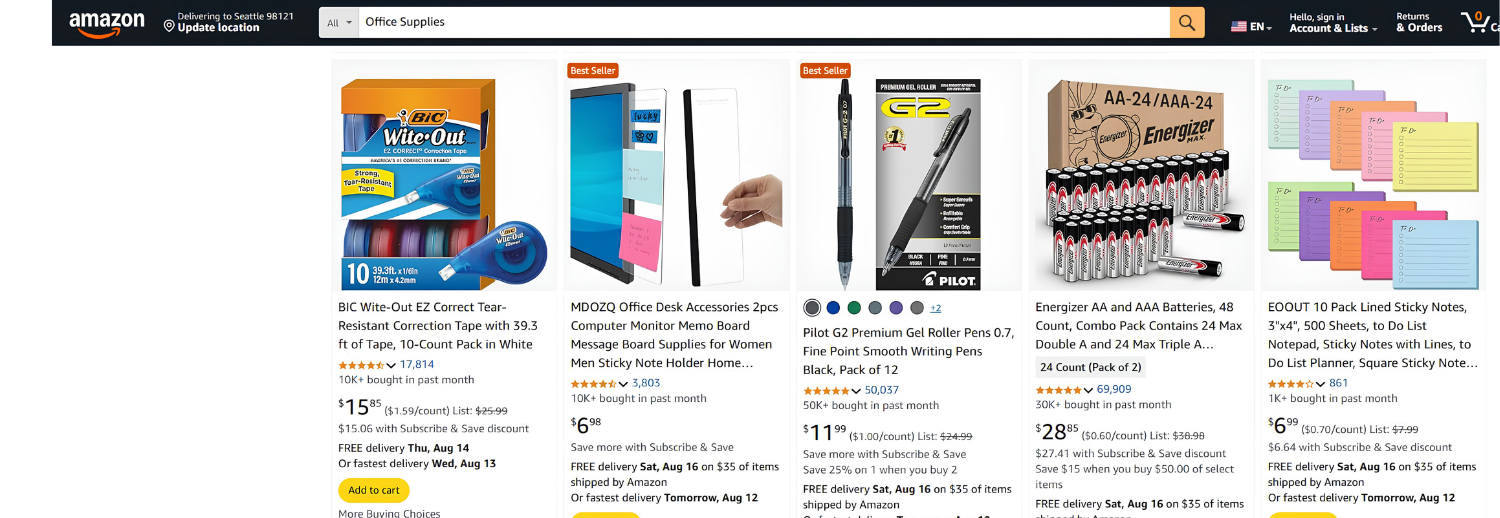
Back-to-school shoppers are not always searching for a specific brand. Many are shopping by need.
Common searches include:
Dorm room organization
First-day-of-school outfits
Lunchbox essentials
Teacher classroom supplies
College apartment necessities
School-approved electronics
Easy weekday meal solutions
Brands can improve seasonal visibility by updating product content to reflect these use cases naturally.
That may include:
Seasonal keywords
Updated product images
Back-to-school lifestyle photography
Clear sizing and compatibility information
Product bundles or multipacks
Product comparison charts
Mobile-friendly bullet points
Amazon A+ Content focused on common customer needs
The goal is not to force the phrase "back-to-school" into every sentence. The goal is to help shoppers immediately understand why the product belongs on their shopping list.
Value Is Driving Customer Decisions
Today's shoppers are paying close attention to price, but value means much more than offering the lowest price.
Customers also consider:
Product durability
Pack quantity
Reusability
Warranty coverage
Shipping speed
Product reviews
Convenience
Whether the product solves multiple needs
Brands can communicate value through stronger product images, comparison charts, bundles, coupons, and clear product benefits.
Offering discounts without a margin strategy may increase sales while reducing profitability. A strong seasonal plan considers advertising costs, marketplace fees, fulfillment expenses, promotional funding, and expected conversion rates before any discount goes live.
Revenue is exciting. Profitable revenue is even better.
Fulfillment Is Part of the Seasonal Marketing Plan
Marketing teams often focus on traffic and conversions. Operations teams focus on inventory and shipping. During seasonal demand, those strategies cannot operate independently.
A successful back-to-school e-commerce strategy connects:
Promotional calendars
Advertising budgets
Inventory forecasts
Amazon FBA replenishment
Direct-to-consumer fulfillment
Carrier capacity
Customer delivery expectations
A sudden increase in orders can quickly expose poor inventory visibility or inefficient warehouse processes. Late shipments, stockouts, cancellations, and poor delivery experiences can quickly erase the success of an otherwise effective marketing campaign.
The strongest brands prepare their fulfillment strategy before increasing demand, not after orders begin piling up.
Start Earlier and Build More Flexibility
The back-to-school season is not simply starting earlier. It is becoming more distributed.
Some customers purchase higher-priced items early. Others wait until final school supply lists become available. College shoppers often buy in stages as housing plans are finalized. Brands need sufficient inventory and operational flexibility to meet demand throughout each phase of the shopping season.
At Marketplace Pros, backed by Weisser Distributing's warehousing and fulfillment expertise, we help e-commerce brands connect seasonal strategy with practical execution. Our team supports product listing optimization, marketplace management, inventory planning, Amazon FBA preparation, direct-to-consumer fulfillment, and multichannel operations.
A seasonal sales opportunity is only valuable when your business is prepared to deliver on it.
Ready to prepare for your next e-commerce demand spike? Reach out to Marketplace Pros and let us build a strategy before the rush begins.
We do not just move products. We move businesses forward.