
For many emerging brands, Amazon is the first major step beyond their own website.
It shouldn't be the last.
One of the clearest logistics trends we're seeing heading into the 2026 holiday season is brands expanding across multiple sales channels at the same time.
A company that started by shipping direct-to-consumer orders may now be selling through Amazon while also receiving purchase orders from national or regional retailers.
That's good news for growth.
It can also create an operational mess if the fulfillment strategy hasn't grown with the sales strategy.
DTC Fulfillment and Retail Fulfillment Are Two Different Businesses
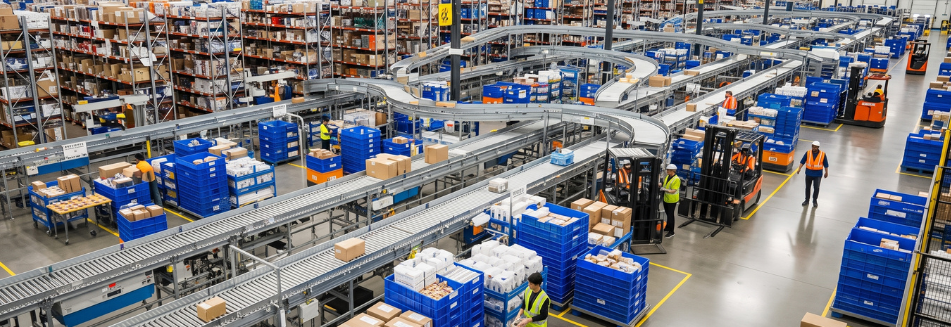
Shipping an ecommerce order is relatively straightforward.
Pick the product. Pack the order. Create the shipping label. Get it to the customer.
Wholesale fulfillment introduces an entirely different set of requirements.
Depending on the retailer, a shipment may require EDI documents, Advance Ship Notices, GS1-128 carton labels, specific carton configurations, routing through a transportation management system, appointment requirements, and strict shipping windows.
Missing one of those requirements doesn't necessarily prevent the retailer from receiving the merchandise.
Sometimes it does something worse.
It creates a chargeback.
Retail Compliance Is Part of Your Margin
Retail compliance is sometimes treated as a warehouse problem.
It's actually a profitability problem.
Consider what happens when a growing brand receives a large retail purchase order during the holiday season.
The sale looks great on paper.
But if the shipment leaves with an incorrect carton label, misses an ASN requirement, uses the wrong carrier, or ships outside the retailer's designated window, deductions can quickly reduce the margin on that order.
The larger the wholesale business becomes, the more important operational compliance becomes.
The goal isn't simply to ship the order.
The goal is to ship it correctly the first time.
Your Inventory Shouldn't Be Trapped in Channels
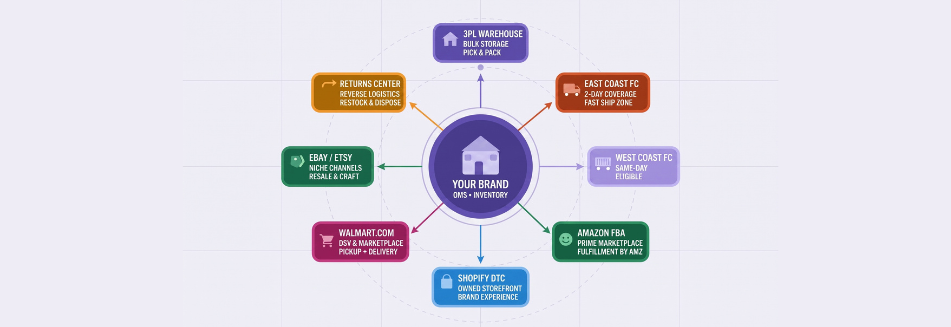
Another challenge occurs when companies create separate inventory pools for every marketplace.
Amazon has inventory.
The website has inventory.
Wholesale has inventory.
Then one channel sells faster than expected while another is sitting on excess stock.
A more flexible approach is to maintain inventory that can be allocated across channels as demand changes.
That might mean replenishing Amazon FBA from a domestic warehouse one week, fulfilling ecommerce orders the next, and preparing a retailer purchase order from the same inventory pool.
The warehouse becomes more than storage.
It becomes the operational hub connecting the brand's sales channels.
Holiday Makes Omnichannel Flexibility More Valuable
Demand doesn't follow a perfect forecast during Q4.
A product can suddenly gain momentum on Amazon.
A retailer can place an unexpected purchase order.
A promotion can drive a surge through the company's own website.
Brands that can move inventory between those opportunities have an advantage.
Brands that can't may find themselves staring at an unfortunate situation:
Inventory in one place. Demand somewhere else.
The Question Has Changed
Brands used to ask:
"Can our 3PL ship our ecommerce orders?"
The better question today is:
"Can our logistics partner support where we're going next?"
Can they prepare Amazon replenishment?
Can they fulfill direct-to-consumer orders?
Can they understand a retailer routing guide?
Can they support EDI?
Can they execute labeling, routing, and value-added services?
Can they help troubleshoot an order before a compliance mistake becomes a chargeback?
Those capabilities become increasingly important as a brand graduates from a single-channel business into a true marketplace business.
One Brand. Multiple Channels. One Operational Strategy.
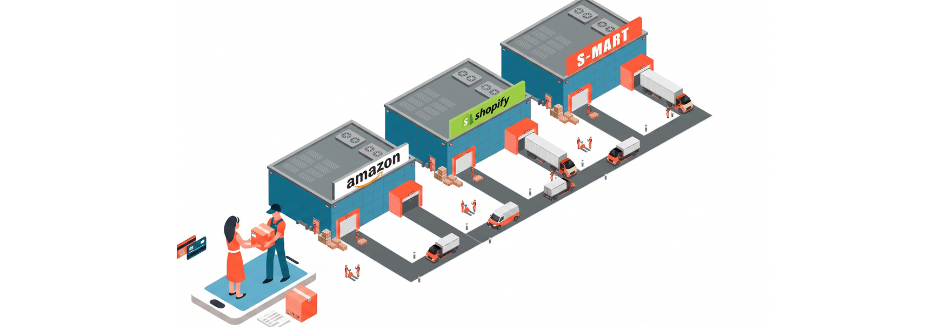
At Weisser Distributing and Marketplace Pros, we see fulfillment and marketplace management as connected parts of the same operation.
Marketplace Pros helps brands manage and grow marketplace channels, including Amazon.
Weisser Distributing provides the physical infrastructure behind that growth, from inventory storage and ecommerce fulfillment to Amazon preparation and retailer-compliant wholesale distribution.
The objective is simple:
Put inventory where the opportunity is.
Whether the next order comes from Amazon, your website, or a major retailer, your fulfillment operation should be ready to move with it.