
AI Product Discovery Is Changing E-commerce: Is Your Brand Ready?

Not long ago, e-commerce product discovery started with a search bar.
A shopper typed in a keyword, reviewed a page of results, compared a few listings, and made a decision. Today, that process is beginning to change. More shoppers are using artificial intelligence tools to research products, compare options, and narrow down what to buy before they ever reach Amazon or a brand's website.
That means e-commerce brands are no longer competing only for traditional search rankings. They are also competing to become the products AI assistants recommend.
What Is AI Product Discovery?
AI product discovery happens when shoppers use conversational tools such as ChatGPT, Gemini, or marketplace-based shopping assistants to find products.
Instead of searching for "best work shoes," a customer might ask:
"What is the best slip-resistant work shoe for someone who stands on concrete all day?"
That question contains more detail, context, and purchase intent than a traditional keyword search. AI tools analyze product information and recommend the options that best match the shopper's needs.
Research published in June 2026 found that AI brand recommendations can lead consumers to conduct branded searches, visit company websites, and visit brand-specific pages on retailer websites. However, those actions may be credited to search engines or direct traffic rather than the AI assistant that influenced the shopper in the first place.
In other words, AI may already be influencing e-commerce traffic more than traditional analytics reports reveal.
Traditional E-commerce SEO Is Not Going Away
This does not mean keywords no longer matter.
Amazon SEO, Google SEO, advertising, reviews, conversion rates, and marketplace rankings still play major roles in e-commerce visibility. AI product discovery is adding another layer to the process. It is not replacing everything that came before it.
Recent research into platform-based AI shopping found that customers often move back and forth between conversational AI and traditional search. Shoppers appear to use AI most frequently for exploratory questions that are difficult to express through only a few keywords.
The lesson for brands is simple. Your content needs to work for both shoppers and AI systems.
Product Content Must Answer Real Customer Questions
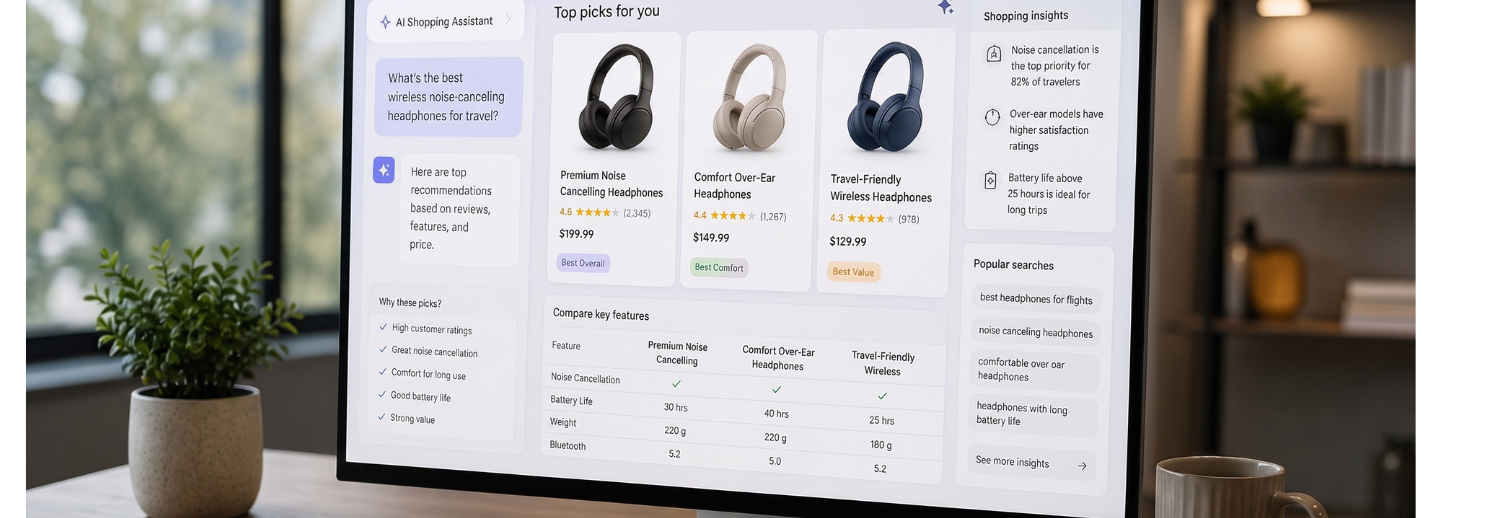
AI systems need clear, detailed, and consistent information to understand when a product is relevant.
That makes the following content increasingly important:
Product titles that clearly identify the item.
Bullet points that explain benefits and specifications.
Product descriptions that address use cases.
A+ Content that reinforces differentiators.
Accurate size, material, compatibility, and application details.
Customer questions and answers.
Reviews that confirm real-world product performance.
Consistent information across Amazon, Walmart, Shopify, and the brand's website.
A listing filled with vague marketing language may sound polished, but it gives an AI system very little substance to work with.
Premium quality for every lifestyle sounds nice. It also says almost nothing.
Clear content wins.
Trust Signals Matter More in AI Shopping
Consumers may use AI to create a shortlist, but they still look for confirmation before buying.
Recent reporting indicates that shoppers continue to validate AI recommendations through familiar trust signals such as ratings, reviews, known brands, secure marketplaces, and reliable payment experiences. AI is becoming a valuable research assistant, but most shoppers are not handing over the credit card and saying, "Surprise me."
For e-commerce brands, this means strong product information must be supported by:
Positive and relevant reviews.
Accurate inventory.
Competitive pricing.
Reliable shipping.
Clear return policies.
Professional product imagery.
Consistent brand messaging.
AI may help a shopper discover a product. The listing and customer experience still need to close the sale.
How E-commerce Brands Can Prepare
Brands do not need to rebuild their entire e-commerce strategy overnight. A practical starting point is to audit product content through the eyes of a customer asking detailed questions.
Consider:
Does the listing clearly explain who the product is for?
Does it identify the problem the product solves?
Are important specifications easy to find?
Does the content explain what makes the product different?
Is the same information consistent across every sales channel?
Are customer questions being answered before they become objections?
Brands can also review how their products appear when common category questions are entered into AI tools. Results will not always be consistent, but they can reveal whether a brand has enough authoritative, understandable content available online.
E-commerce Visibility Is Entering a New Era
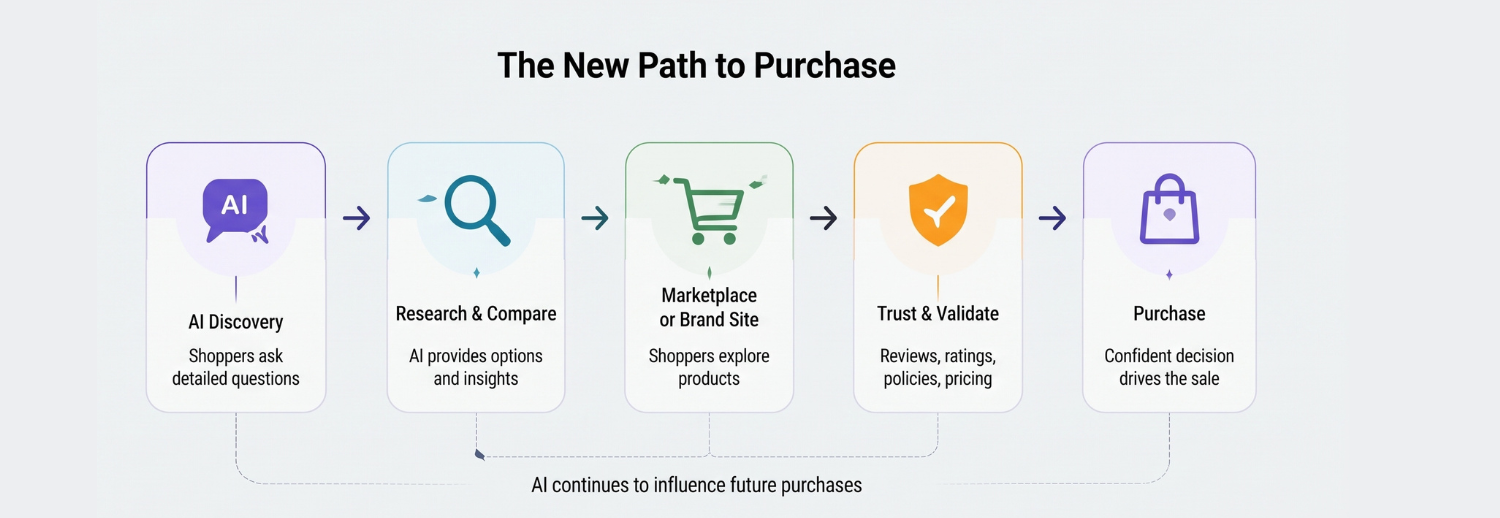
AI product discovery is still developing, but the direction is clear.
Shoppers increasingly expect search experiences that understand full questions, not just isolated keywords. Brands that organize their product information around customer needs, use cases, and clear differentiators will be better positioned for both traditional search and AI-assisted shopping.
At Marketplace Pros, we help brands build e-commerce content and marketplace strategies designed for how customers shop today. From Amazon listing optimization and A+ Content to inventory planning and fulfillment, we connect the front end of e-commerce with the operational systems required to deliver the sale.
Because being recommended is only the beginning. Your product still needs to be found, trusted, purchased, and delivered.
Ready to strengthen your e-commerce visibility? Reach out to Marketplace Pros, and let's make your products easier for both shoppers and search systems to understand.
We don't just move products. We move businesses forward.