
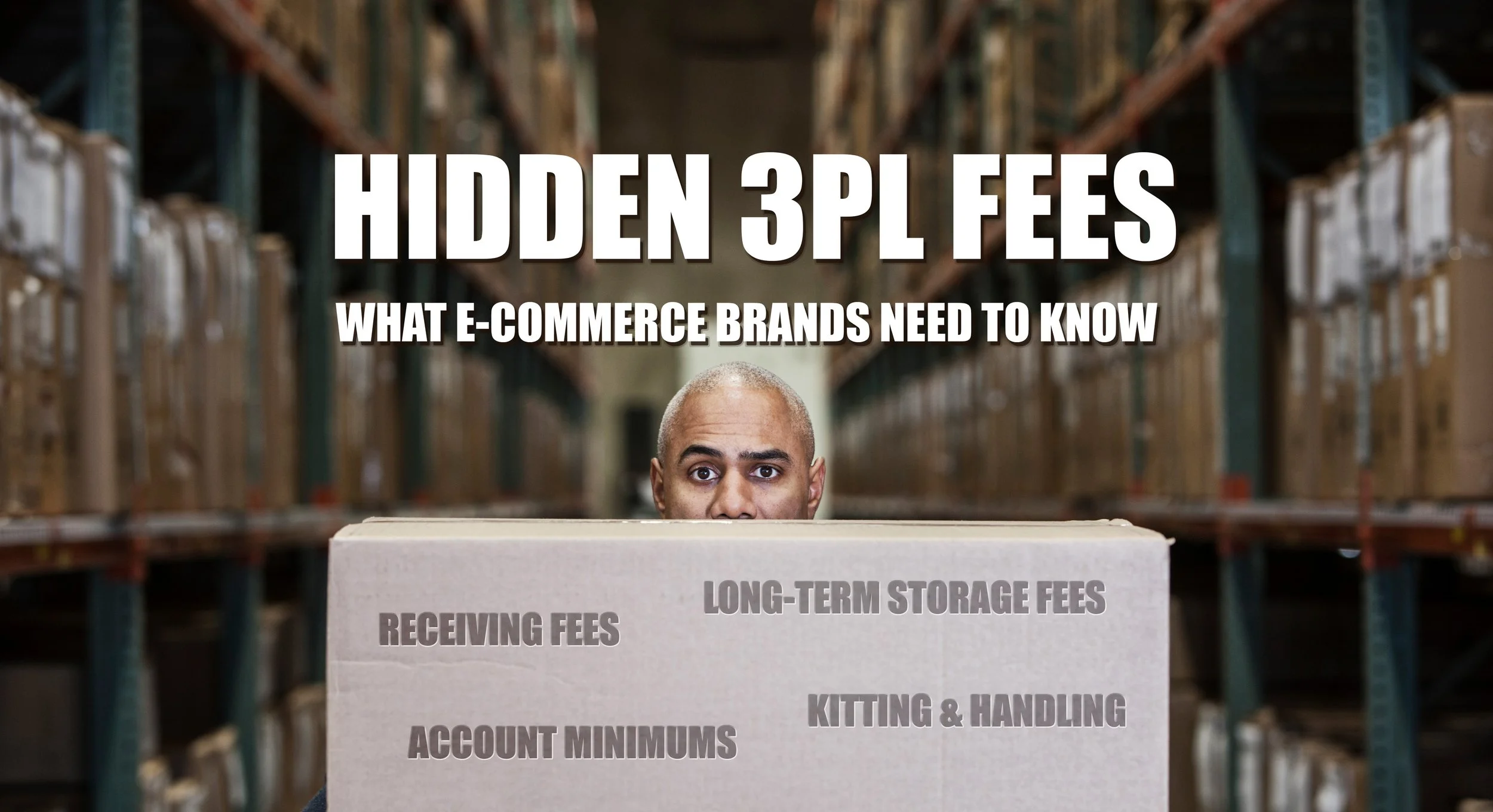
You got a quote from a 3PL. The per-unit rate looked reasonable. Then your first invoice arrived and the number was nothing like what you expected.
If that sounds familiar, you're not alone. Hidden fees are one of the most common frustrations brands run into when working with a third-party logistics provider. The base rate gets you in the door. The add-ons are where margins quietly disappear.
Before you sign another fulfillment contract, here's exactly what to look for.
Why 3PL Pricing Is Rarely as Simple as the Quote
Fulfillment operations involve dozens of touch points: receiving inventory, storing it, picking and packing individual orders, handling returns, labeling, kitting, and carrier handoffs. Most 3PL providers charge separately for each of those touch points but they don't always make that clear upfront.
The base quote typically covers standard pick-and-pack. Everything else is subject to additional line items that vary by provider. By the time you account for all of them, the effective cost per unit can be 30 to 60 percent higher than the original rate you were quoted.
Here is where that gap usually comes from.
The Most Common Hidden 3PL Fees
Receiving Fees
Most 3PLs charge to receive your inbound shipments sometimes per pallet, sometimes per carton, sometimes per unit. This one is easy to miss in a proposal because it does not show up in the per-order fulfillment rate. If you are shipping in high volume, receiving fees add up fast.
Long-Term Storage Fees
You may be charged at a flat monthly storage rate initially, but many providers apply escalating fees for inventory that sits beyond 90 or 180 days. This is especially relevant for seasonal SKUs or products with slower velocity. Some 3PLs also charge minimum monthly storage fees regardless of how much product you actually have in their facility.
Account Minimums
Some providers require a minimum monthly spend to maintain your account. If your volume dips in a slow month, you pay the minimum whether you used those services or not. This creates unpredictable cost floors that are difficult to budget against.
Kitting and Special Handling Fees
If your products require assembly, bundling, poly bagging, or branded packaging inserts, expect additional per-unit charges. These fees are not always disclosed in the initial proposal. Providers sometimes categorize these as "value-added services" billed at hourly or per-piece rates that are not nailed down until you are already operational with them.
Returns Processing Fees
Returns are part of e-commerce. But some 3PLs charge separately for receiving a return, inspecting it, repackaging it, and restocking it sometimes as four separate line items. For categories with high return rates, this can represent a meaningful cost that was not factored into your original margin model.
Carrier Surcharges and Zone Upcharges
Your fulfillment provider may quote you a carrier rate, but the final billed rate often includes fuel surcharges, residential delivery fees, and dimensional weight adjustments that were not in the original estimate. Understand exactly what the carrier rate includes before you rely on it for margin planning.
Setup and Onboarding Fees
Some 3PLs charge a one-time fee to configure your account, integrate with your store, or set up your label templates. This is not universal, but it is common enough that it is worth asking about before you commit.
Portal and Tech Fees
A number of 3PL providers charge monthly fees for access to their client portal, reporting tools, or EDI integrations. If you are managing multiple sales channels, these access fees can stack up in ways that are not obvious from the initial pitch.
How to Protect Yourself Before Signing a 3PL Agreement
The best defense is a detailed rate card that itemizes every service not just pick-and-pack. Before you sign, ask your prospective 3PL provider to answer these questions in writing:
What is the per-carton and per-pallet receiving fee?
Is there a minimum monthly storage charge?
How are returns processed and billed?
Are there account minimums, and what happens if I fall short?
What does your carrier rate quote include, and what is billed separately?
Are there any setup, integration, or tech access fees?
If a provider hesitates to answer any of those in a clear, written format, that is a signal worth paying attention to.

What Marketplace Pros Does Differently
Marketplace Pros was built for brands that are serious about protecting margins, not losing them to fine print.
Our approach to pricing is straightforward: no surprise line items, no vague "value-added service" buckets that balloon your invoice at the end of the month. When you work with us, you know what you are paying before a single unit ships. That clarity is intentional. We operate as a true growth partner not a vendor looking to maximize revenue per invoice.
Our 3PL and warehousing services are structured to support Amazon FBA prep, Amazon third-party fulfillment, and broader e-commerce fulfillment with rate structures that are built for operational predictability. We handle the details of receiving, storage, pick-and-pack, labeling, and carrier coordination so you can stay focused on building your brand.
No hidden fees. No minimums designed to penalize low-volume months. No surprises.
The Bottom Line
The 3PL market is competitive, and low headline rates are how a lot of providers win business. But what a brand actually pays is determined by the full rate card not the line item that made it into the proposal.
Do the math on the total cost per unit before you commit. Ask every question. Get every answer in writing.